Grains & Pseudocereals
Freekeh
Triticum turgidum subsp. durum
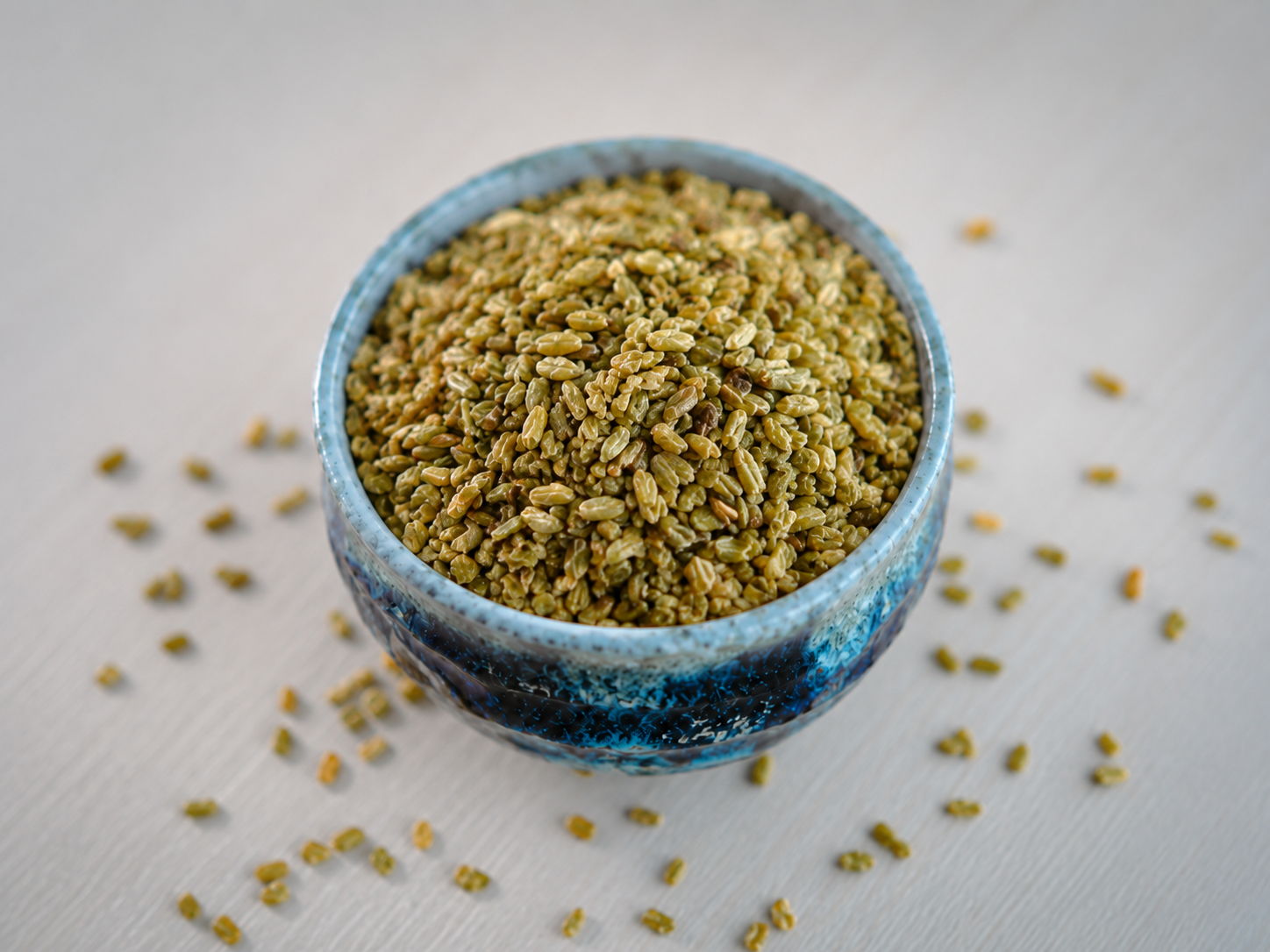
Freekeh is a roasted young green wheat with a smoky, nutty flavour and a chewy texture. It is higher in protein and fibre than many common cooked grains, making it a useful base for vegetarian bowls, pilafs, salads and soups. Because it is made from wheat, freekeh is not gluten-free.
Macros are per 100g of the cooked ingredient (e.g. oats, quinoa, lentils and other pantry staples that require cooking). Nutritional values are estimated using recognised nutrition databases and calorie-tracking software to provide a practical guide, although they may vary depending on the exact ingredients and brands you use.
Origin
Freekeh is traditionally associated with the Levant and wider Middle East, where young green wheat is harvested before full maturity, roasted, dried and rubbed to remove the husk. The name comes from the Arabic word meaning “to rub”, referring to this traditional processing method. It has long been used in everyday dishes across countries such as Palestine, Lebanon, Syria, Jordan and Egypt, often cooked as a pilaf or served with vegetables, legumes, yoghurt or nuts.
Culinary uses
- · pilaf
- · grain bowls
- · salads
- · soups
- · stews
- · stuffed vegetables
- · veggie patties
Cooking guide
Rinse freekeh before cooking. For cracked freekeh, use about 1 part freekeh to 2–2.5 parts water or stock and simmer for 15–20 minutes until tender but still chewy. Wholegrain freekeh takes longer, usually 35–45 minutes. Drain any excess liquid, then let it rest covered for a few minutes. Toasting it briefly in olive oil before adding liquid can deepen its smoky, nutty flavour.
Storage
Store dry freekeh in an airtight container in a cool, dark cupboard. Because it is a wholegrain product, it is best used within a few months once opened for the freshest flavour. Cooked freekeh should be refrigerated in a sealed container and used within 3–4 days, or frozen in portions for quick meal prep.
Buying guide
Choose cracked freekeh if you want a quicker-cooking option for everyday bowls, pilafs and salads. Choose wholegrain freekeh if you prefer a chewier texture and do not mind a longer cooking time. Look for clean, dry grains with a pleasant smoky smell. Avoid packets that smell musty, stale or overly bitter. Freekeh contains gluten, so it is not suitable for people with coeliac disease or wheat allergy.
Health benefits
- plant protein
- high fibre
- iron
- magnesium
- zinc
- filling
- steady energy