Dairy
Greek yoghurt
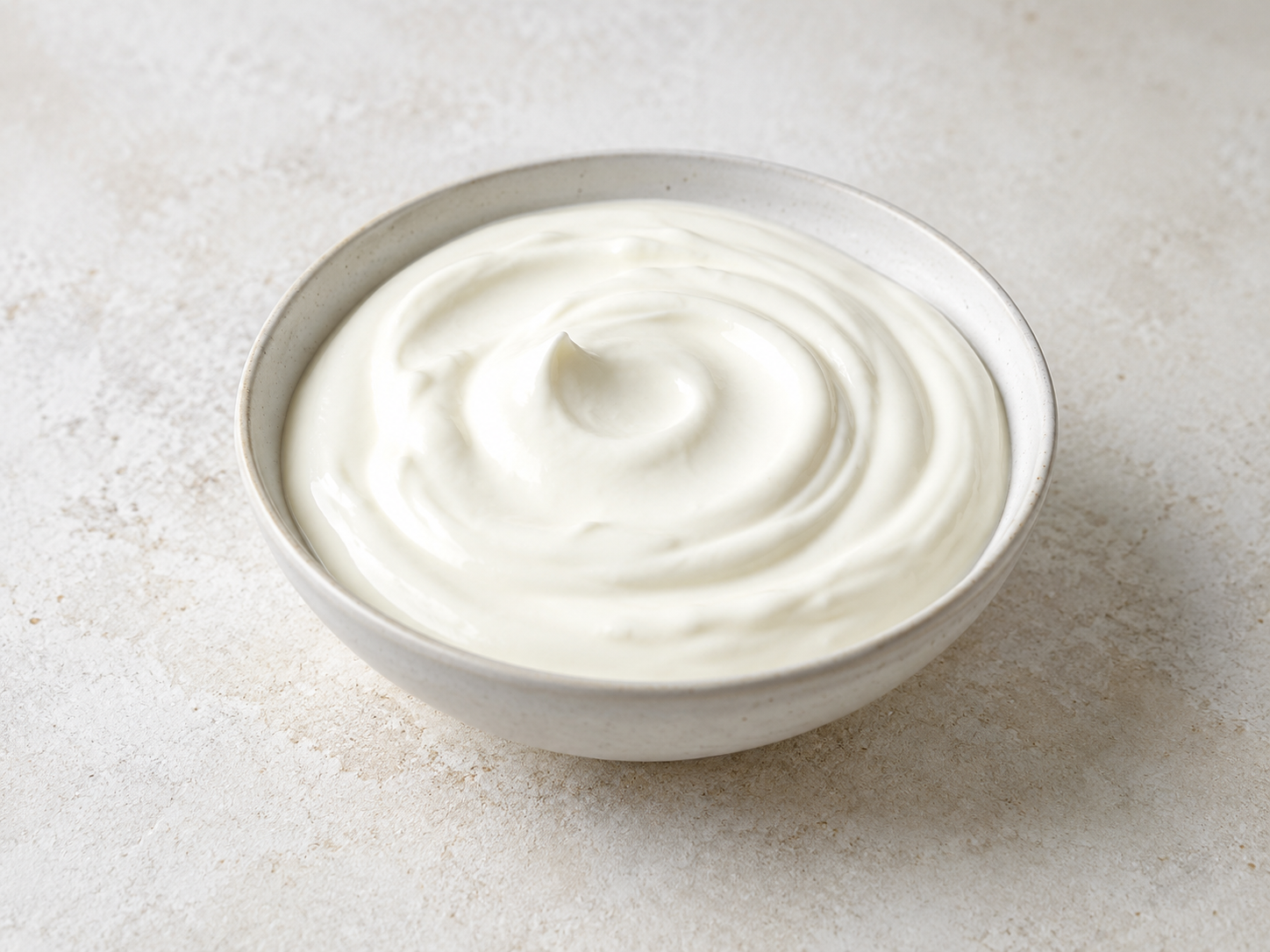
Greek yoghurt is a thick strained yoghurt with a creamy texture and a tangy flavour. It is higher in protein than regular yoghurt because some of the liquid whey is removed during straining. As a complete dairy protein, it is a practical vegetarian protein booster for breakfasts, dips, sauces, marinades, bowls and desserts.
Macros are per 100g of the cooked ingredient (e.g. oats, quinoa, lentils and other pantry staples that require cooking). Nutritional values are estimated using recognised nutrition databases and calorie-tracking software to provide a practical guide, although they may vary depending on the exact ingredients and brands you use.
Origin
Strained yoghurt has a long history across the Eastern Mediterranean, Middle East, Balkans and South Asia, where yoghurt was drained to make it thicker, richer and longer-lasting. The modern name “Greek yoghurt” usually refers to this strained style rather than one single origin. Today, it is widely used as a high-protein dairy ingredient in both sweet and savoury cooking.
Culinary uses
- · breakfast bowls
- · dips
- · sauces
- · marinades
- · overnight oats
- · smoothies
- · desserts
Cooking guide
Greek yoghurt is ready to eat straight from the tub. Use it with fruit, nuts, seeds or granola, stir it into overnight oats, blend it into smoothies, or mix it with herbs, lemon and garlic for dips and sauces. It also works well in marinades because its acidity helps tenderise ingredients. Avoid boiling it directly, as high heat can make it split or turn grainy. For warm dishes, stir it in off the heat or use it as a cool topping.
Storage
Keep Greek yoghurt refrigerated and use by the date on the pack. Once opened, reseal tightly and use within 3–5 days, depending on the brand guidance. Some liquid separation is normal and can be stirred back in. Discard it if it smells unpleasant, looks mouldy, tastes fizzy or has changed texture significantly.
Buying guide
Choose plain unsweetened Greek yoghurt for the most versatile option and the best protein-to-sugar ratio. Low-fat or fat-free versions are usually higher in protein per calorie, while full-fat Greek yoghurt is richer and creamier. Check the label carefully: “Greek-style” yoghurt may be thickened rather than strained and can have a different protein content. For savoury recipes, avoid sweetened or flavoured versions.
Health benefits
- complete protein
- high protein
- calcium
- vitamin B12
- phosphorus
- filling
- gut-friendly cultures
- low fat option
- low sugar option