Seeds
Sunflower Seeds
Helianthus annuus
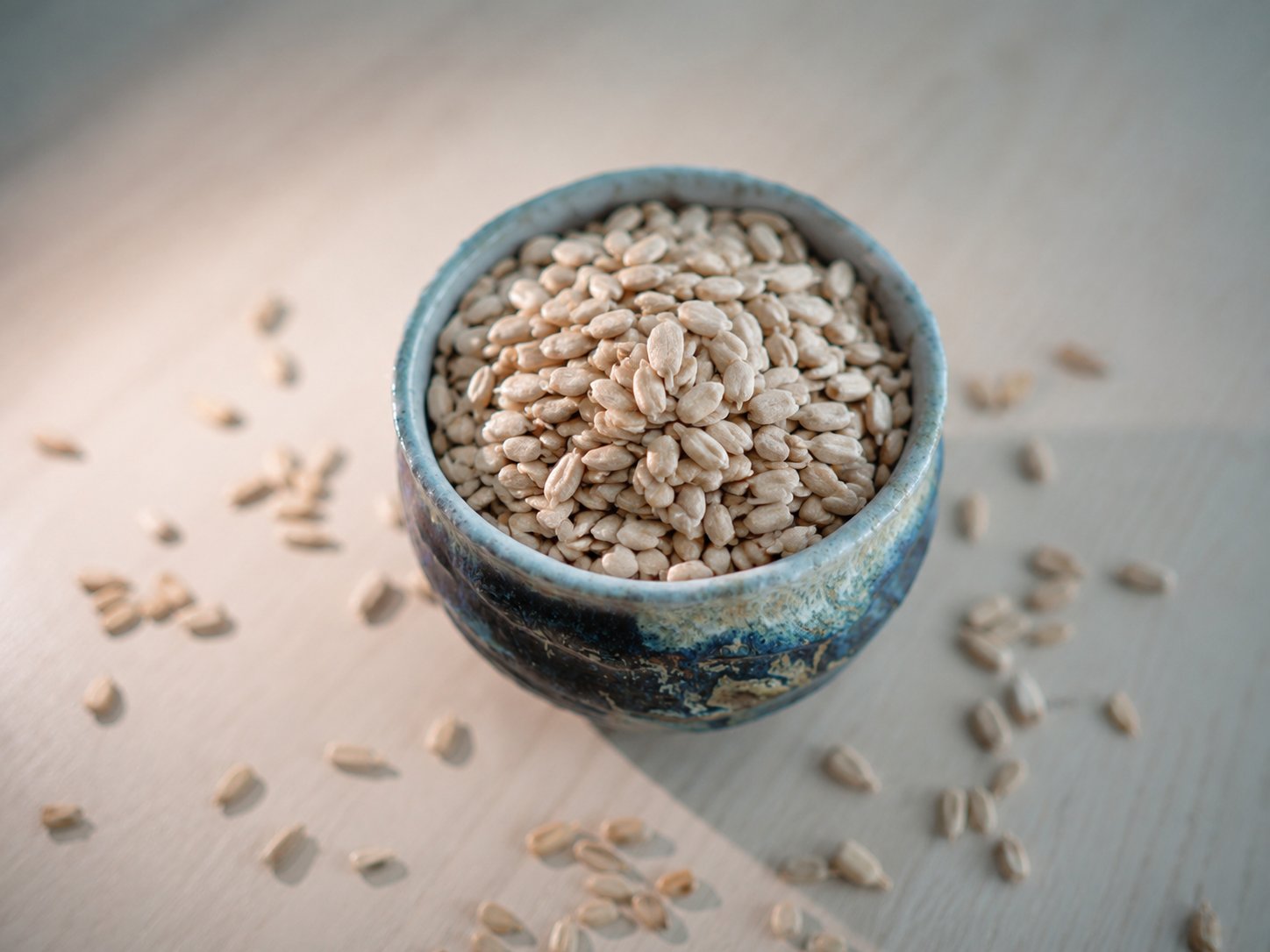
Sunflower seeds are small, nutty seeds with a mild flavour and a satisfying crunch. They are rich in plant protein, fibre and healthy fats, making them an easy vegetarian protein booster for salads, bowls, porridge, granola, breads and snacks. They are not a complete protein on their own, but they add useful texture, minerals and extra staying power to plant-forward meals.
Macros are per 100g of the cooked ingredient (e.g. oats, quinoa, lentils and other pantry staples that require cooking). Nutritional values are estimated using recognised nutrition databases and calorie-tracking software to provide a practical guide, although they may vary depending on the exact ingredients and brands you use.
Origin
Sunflowers are native to North America, where they were cultivated by Indigenous communities for food, oil, medicine and dye. The crop later spread to Europe and became especially important for sunflower oil production. Today, sunflower seeds are eaten globally as a snack, baking ingredient and affordable seed-based source of protein, minerals and unsaturated fats.
Culinary uses
- · salad toppings
- · grain bowls
- · porridge
- · granola
- · seed butter
- · bread
- · energy bites
Cooking guide
Sunflower seeds can be eaten raw, toasted or blended. Toast them in a dry pan over medium heat for 3–5 minutes, stirring often, until lightly golden and nutty-smelling. Add them to salads, soups, roasted vegetables, yoghurt bowls or breakfast oats for crunch. They can also be blended into sunflower seed butter, used in pesto-style sauces, mixed into bread dough or added to homemade granola and energy bites. For a softer texture, soak them before blending into dips or creamy sauces.
Storage
Store sunflower seeds in an airtight container in a cool, dark cupboard. Because they are high in natural oils, they can turn rancid faster than dry grains or pulses. Once opened, use within a few months, or keep them in the fridge or freezer for longer freshness. Discard seeds that smell bitter, oily, stale or musty.
Buying guide
Choose hulled sunflower seeds for easiest everyday use. Raw seeds are more versatile, while roasted seeds have a stronger nutty flavour but may contain added salt or oil. Check labels if you want unsalted seeds for cooking or recipe testing. Sunflower seed butter is useful as a nut-free spread, but check for added sugar, salt or stabilisers.
Health benefits
- plant protein
- fibre
- vitamin E
- magnesium
- selenium
- zinc
- healthy fats
- filling