Dairy
Halloumi
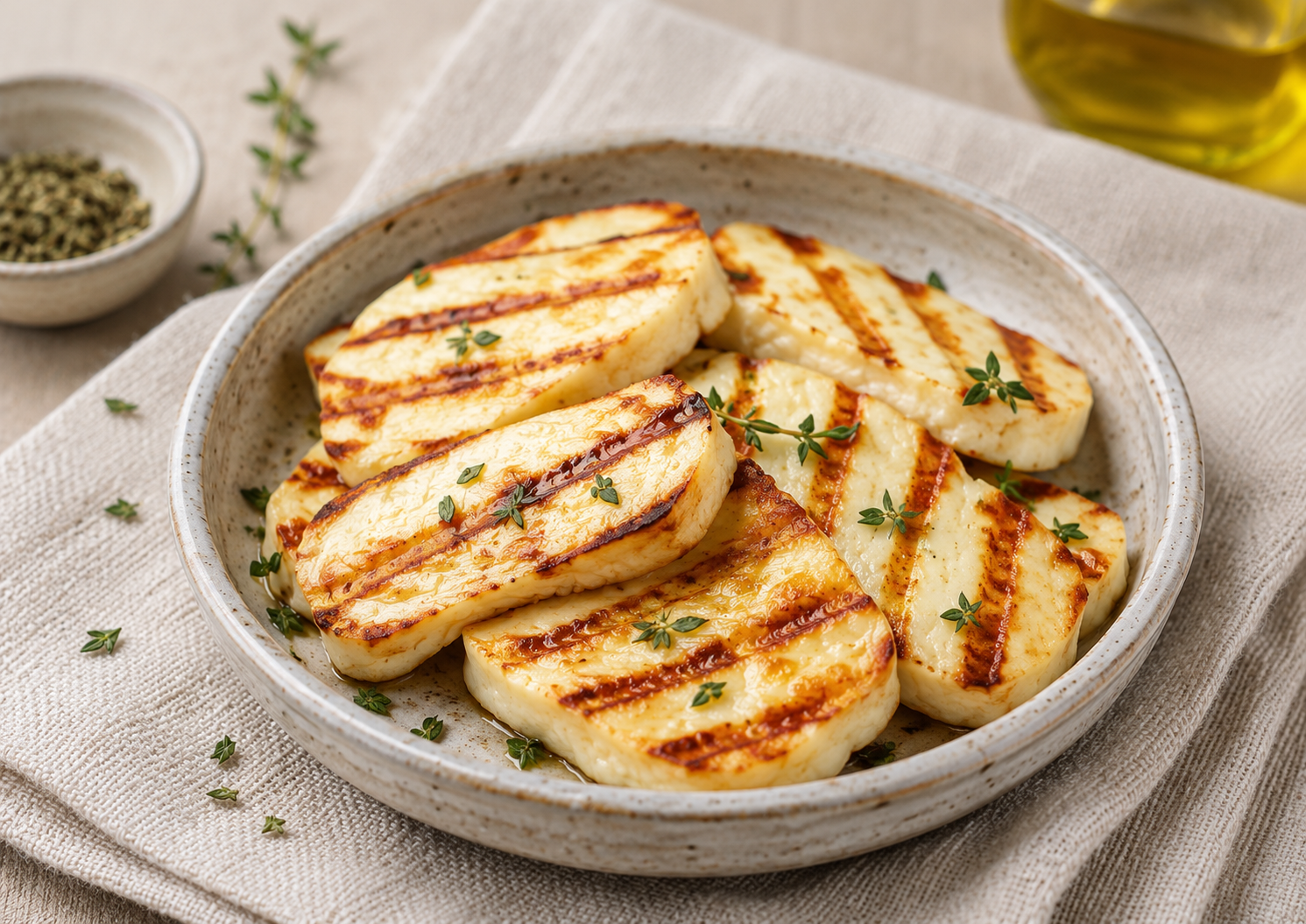
Halloumi is a firm, brined cheese from Cyprus with a salty flavour and a high melting point, which means it can be grilled, pan-fried or baked without falling apart. It is rich in complete dairy protein and works well as a vegetarian protein booster in salads, wraps, bowls, skewers and mezze-style meals. Because it is usually high in salt and saturated fat, it is best used as a flavourful protein element rather than the whole base of a meal.
Macros are per 100g of the cooked ingredient (e.g. oats, quinoa, lentils and other pantry staples that require cooking). Nutritional values are estimated using recognised nutrition databases and calorie-tracking software to provide a practical guide, although they may vary depending on the exact ingredients and brands you use.
Origin
Halloumi is traditionally associated with Cyprus and has been made in the Eastern Mediterranean for centuries. It was historically made with sheep’s and goat’s milk, although many modern versions also include cow’s milk. Its firm texture and brined storage made it practical in warm climates, and it remains central to Cypriot, Greek, Turkish and Middle Eastern-inspired cooking.
Culinary uses
- · grilled halloumi
- · salads
- · wraps
- · grain bowls
- · skewers
- · burgers
- · mezze
Cooking guide
Halloumi can be eaten as it is, but it is usually best grilled or pan-fried. Slice it into thick pieces, pat dry, then cook in a hot dry pan or lightly oiled pan for 1–2 minutes per side until golden. Avoid overcooking, as it can become rubbery. It can also be baked, air-fried or threaded onto skewers with vegetables. If the halloumi tastes very salty, soak slices in cold water for 20–30 minutes before cooking, then dry well.
Storage
Keep halloumi refrigerated in its original brine or packaging until opened. Once opened, store leftovers in an airtight container and use within a few days, following the pack guidance. If the cheese came in brine, keeping it covered with brine can help preserve texture and flavour. Do not use halloumi if it smells sour, looks slimy or has visible mould not expected for the product.
Buying guide
Choose traditional halloumi made with sheep’s or goat’s milk if you want a more classic flavour. Cow’s milk versions are often milder and may be cheaper. Look for a firm block that slices cleanly and has a fresh, salty dairy smell. Check the salt level if you are watching sodium, as halloumi can be very salty. Reduced-fat versions exist, but they may cook and brown differently.
Health benefits
- complete protein
- high protein
- calcium
- phosphorus
- vitamin B12
- filling
- low carb